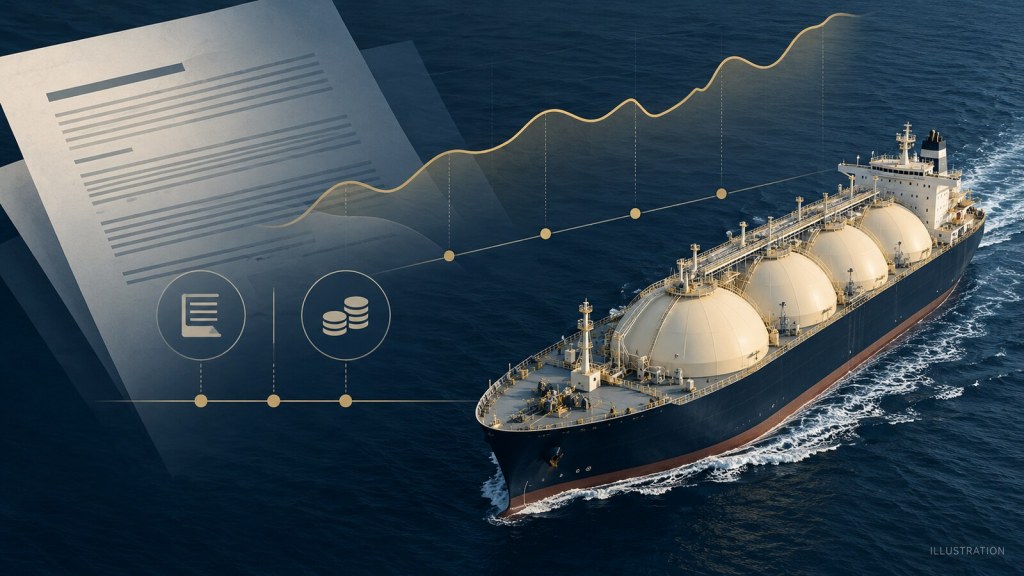
Shell’s third-quarter filing contains a useful warning for finance teams: a liability can move sharply even when the current-period cash flow does not.
Shell said index-linked vessel leases added $7.684 billion to lease liabilities during the first nine months of 2026. The third quarter included a $5.4 billion noncash increase in the variable component of shipping leases. Those amounts cover overlapping periods and should not be added together.
The judgment
- Implication: Lease remeasurement can make leverage and asset balances change faster than the underlying cash forecast. Management should explain the accounting movement separately from the expected payment path.
- What would change the conclusion: A sustained reversal in the relevant shipping indices, contract amendments, or evidence that spot rates reliably predict the long-term payment profile would narrow the gap between the reported liability and forecast cash exposure.
- Management action: Maintain a contract-level bridge from reported lease liabilities to probability-weighted cash payments, with index scenarios, renewal and termination terms, covenant effects, and the timing of P&L depreciation.
The filing says the accounting estimate may not equal the cash forecast
Under IFRS 16, Shell remeasures the affected lease liabilities using current spot rates for the underlying index. The company also states that those spot rates may not be a fair reflection of the payments ultimately made under long-term lease commitments.
That distinction is the core finance issue. The reported liability is an accounting measurement based on the applicable standard and conditions at the reporting date. A treasury or operating forecast asks a different question: when will cash leave, under which contractual formula, and how much uncertainty remains?
The filing does not say the $7.684 billion is a realized cash loss. It says the Middle East conflict drove significant increases in the relevant index, producing a higher lease liability and a corresponding increase in right-of-use assets. Depreciation from that asset remeasurement will be recognized prospectively over the remaining lease term.
Why the liability still matters
Calling the movement noncash does not make it unimportant. The remeasurement changes reported leverage, the right-of-use asset base, and future depreciation. It can also affect how investors, lenders and boards interpret capital intensity—even though Shell’s net debt declined to $39.7 billion and the company generated $16.3 billion of free cash flow in the quarter.
The quarter shows why headline leverage measures need a bridge. Shell reported $6.6 billion of lease additions, including the $5.4 billion noncash shipping-lease increase, while also paying $3.2 billion for share repurchases and $2.2 billion in cash dividends. Management therefore has to explain three different uses of the balance sheet: contractual remeasurement, operating investment and discretionary shareholder distributions.
An earlier Numbers & Judgment analysis of Suncor’s transfer of lease and abandonment obligations made a related point: transaction value is not captured by cash proceeds alone. The same logic applies here. A lease liability is not identical to near-term cash demand, but it is part of the economic obligation that capital-allocation decisions must absorb.
Forecast the formula, not only the recorded balance
A practical forecast should not simply carry the quarter-end lease liability forward. It should model the contractual index mechanics and separate at least four items:
- fixed payments that are not exposed to the index;
- variable payments using a base, lower and higher index path;
- accounting remeasurement and future depreciation; and
- cash payment timing, including any lags, collars, floors or reset dates in the contracts.
This is the same operating principle discussed in Google Power Agreements Put Contracts Behind Capacity: a long-term contract can move economic risk without transferring legal ownership. Finance teams should evaluate the obligation embedded in the contract, not only its label.
The free Forecast Scenario Planner can provide a starting structure for the index cases. It should be supplemented with contract-level payment timing because the tool models operating scenarios rather than a lease subledger.
Controls should connect contracts, accounting and treasury
Index-linked leases create a control problem when the commercial team, accounting team and treasury team maintain different versions of the same exposure. The contract repository may hold the formula, accounting may calculate the quarter-end liability, and treasury may forecast cash using operating assumptions. Without a shared reconciliation, a large movement can appear surprising even when the contract terms were known.
A useful quarterly control is a three-way bridge: prior reported liability to current reported liability; reported liability to expected undiscounted payments; and expected payments to the cash forecast. Each bridge should identify the effect of index changes, discounting, new leases, terminations, payments and foreign exchange.
For boards, the important question is not whether the quarter-end remeasurement will reverse. It is whether the organization understands what would make it persist, how it changes future expense and liquidity, and whether discretionary capital returns remain appropriate under the same stress case.
Sources and method
- Shell plc third-quarter 2026 interim financial report, filed with the SEC on October 29, 2026.
- Shell Form 6-K, dated October 29, 2026.
- IFRS Foundation overview of IFRS 16 Leases.
Reported figures and accounting descriptions above come from Shell’s filing. The interpretation of the forecasting, control and capital-allocation implications is Numbers & Judgment analysis.


Leave a Reply