The Federal Reserve and Bank of England are asking major banks how their exposures to large trading firms changed during the trading day after July’s AI-market turmoil contributed to roughly $15 billion of losses at Jane Street. The question regulators are asking points to a broader control problem: a risk report can be accurate at the end of the day and still miss the period when exposure was greatest.
The Financial Times reported September 21 that regulators have intensified scrutiny of bank relationships with trading firms and market makers including Jane Street and Citadel Securities. Reuters separately reported the inquiry, while noting it could not independently verify the FT report. Neither inquiry, as reported, represents a finding of wrongdoing.
The loss is important, but the measurement interval is the bigger story
Jane Street lost roughly $15 billion in July as a long rally in AI and semiconductor stocks reversed. Part of the loss was associated with its investment in the AI-focused Situational Awareness fund, which was forced to sell most of its public-equity portfolio after the market decline.
According to the FT, regulators now want to understand trading firms’ risk appetite, how banks’ exposures to them evolved throughout the day and how risk controls operated.
That focus on throughout the day is the most consequential detail.
Period-end reporting can hide peak exposure
Finance organizations are built around reporting intervals: month-end cash, quarter-end leverage, daily counterparty exposure, overnight value-at-risk. Those intervals are useful only when they are short enough to capture the speed of the underlying risk.
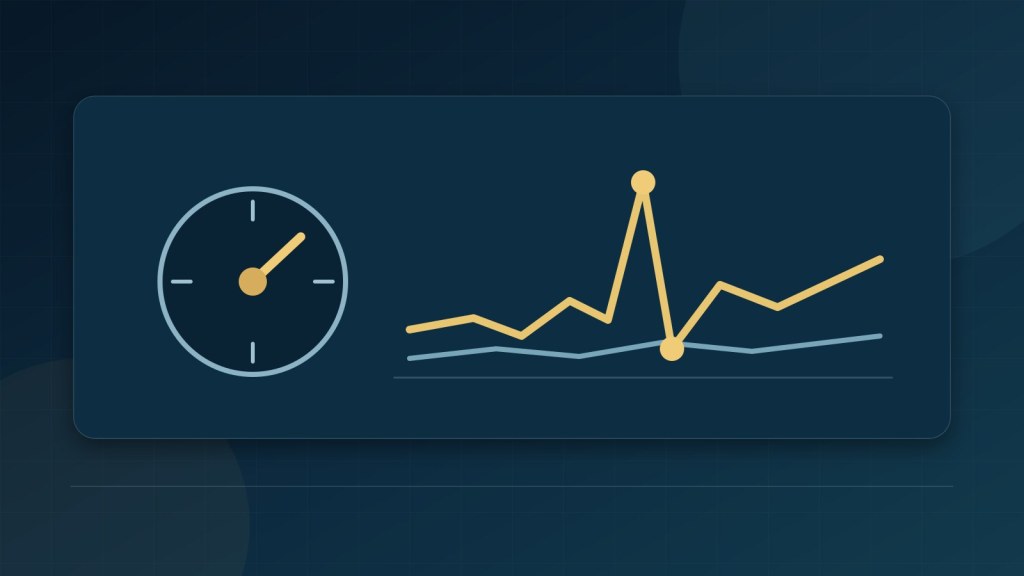
Consider a counterparty whose exposure begins the day at $1 billion, spikes to $5 billion during a volatile market and returns to $2 billion by the close. An end-of-day report showing $2 billion may be factually correct. It is also incomplete if the institution was exposed to $5 billion when liquidity was weakest and collateral was moving fastest.
The control question is therefore not simply, “What was our exposure?” It is, “What was our maximum exposure, how quickly did it change, and how much time did management have to respond?”
Risk moved outside banks, but not necessarily away from them
After the 2008 financial crisis, banks reduced proprietary trading and specialist market-making firms expanded dramatically. Firms such as Jane Street, Citadel Securities, Susquehanna and Hudson River Trading now occupy important positions in global market liquidity.
But banks remain connected to those firms through prime brokerage, financing, derivatives, clearing and market-access relationships. A bank may no longer own a proprietary position directly while still carrying exposure to the institution that owns it.
That distinction is central to modern financial regulation. Moving an activity outside a regulated bank can change where risk resides without eliminating the channels through which stress can return to the banking system.
AI concentration makes the transmission channel more important
The Bank of England was already watching the issue before July’s losses. Its 2026 H1 Systemic Risk Survey found that 32% of respondents cited risks surrounding artificial intelligence as one of the top risks to the UK financial system, up 11 percentage points from the previous survey. Participants specifically identified stretched AI equity valuations among their concerns.
In July, the Bank’s Financial Policy Committee separately warned that increasing interconnectedness between the AI ecosystem and external financing could allow shocks to AI-related assets to propagate more widely through the financial system.
The Jane Street episode does not prove that such a systemic event has occurred. It does demonstrate a plausible transmission path: concentrated AI positions can lose value quickly, leveraged investors can face margin pressure, trading firms can absorb large losses and bank counterparties can suddenly need to reassess their exposures.
The CFO lesson extends beyond trading desks
This is not only a market-risk problem. The same principle applies whenever the velocity of a business risk is faster than the reporting system used to measure it.
- Liquidity: month-end cash can obscure intramonth funding stress.
- Customer concentration: quarter-end receivables can miss a sudden deterioration in a major counterparty.
- Cybersecurity: weekly reporting is inadequate when an incident can spread in minutes.
- Commodity or currency exposure: period-end balances can understate large intraday positions.
- AI-driven markets: concentrated positions can reprice faster than traditional escalation processes operate.
A better risk dashboard measures velocity
For rapidly changing exposures, a useful dashboard should include more than the closing balance. It should track:
- peak exposure during the measurement period;
- speed of change in exposure;
- available collateral and liquidity under stress;
- counterparty and position concentration;
- time required to escalate a limit breach;
- stress losses under correlated market moves; and
- the gap between when risk changes and when management sees it.
The last measure may be the most important. A sophisticated risk model is of limited value if its output reaches decision-makers after the exposure has already changed.
Controls have to operate at the speed of the risk
The regulatory scrutiny following July’s turmoil remains an inquiry, not an enforcement conclusion. But the questions reportedly being asked are revealing.
Modern financial markets can transfer billions of dollars of exposure faster than traditional reporting cycles were designed to observe. As AI-related assets become more interconnected with leverage, private funds and market-making firms, measurement frequency becomes part of risk management itself.
The next generation of financial controls will need to measure not only how much risk an institution owns, but how quickly that risk can change before management sees it.
Sources
- Financial Times, “Fed and BoE step up scrutiny of bank exposure to trading firms after Jane Street loss,” September 21, 2026.
- Reuters, “Fed, BoE probe banks’ exposure to trading firms after Jane Street loss, FT reports,” September 21, 2026.
- Bank of England, Systemic Risk Survey Results — 2026 H1.
- Bank of England, Financial Policy Committee Record — July 2026.
By Robert Young | Numbers & Judgment. Published September 21, 2026.
 Numbers & Judgment
Leave a comment